

Cuyabeno vs Yasuni: Which Amazon Reserve in Ecuador is Right for You?
June 11, 2025
Sustainable Tourism in Ecuador: How Your Travel Choices Empower Local Communities
June 23, 2025The Galapagos Islands aren’t just a destination—they’re a living laboratory of evolution. But visiting requires planning. This guide answers all your questions, from permits to hidden gems, so you can explore responsibly.
1. Essential Pre-Trip FAQs
Do I need a visa or special permit?
- Transit Control Card (TCT): $20, required for all visitors. You can purchase it online at https://siig-cgreg.gobiernogalapagos.gob.ec or in person at the Quito or Guayaquil airports before your flight.
For your convenience, we recommend purchasing the Transit Control Card online in advance to save time at the airport. - National Park Entry Fee: 200 (cash only, paid upon arrival).
- Pro Tip: Keep these documents handy—you’ll show them repeatedly!
When’s the best time to visit?

| Season | Months | Weather | Wildlife Highlights | Crowds |
| Hot & Rainy | Dec–May | Warm (75–85°F), short rains | Sea turtles nesting, marine iguanas active | High |
| Cool & Dry | Jun–Nov | Cooler (70–75°F), windy | Whale sharks (Jun–Nov), albatrosses (Jul–Oct) | Medium |
Best for snorkeling: March–April (water clarity).
How long should I stay?
- Minimum: 5 days (to see key islands like Santa Cruz and Isabela).
- Ideal: 7–10 days (for cruises to remote sites like Genovesa).
2. Getting There & Around
Flights to Galapagos
- Departure Cities: Quito or Guayaquil (direct flights to Baltra/Seymour or San Cristóbal).
- Airlines: LATAM, Avianca (baggage limits: 1 checked bag, ~50 lbs).
- Tip: Arrive at least 2 hours early—your luggage will go through special biosecurity screening.
Getting Around the Islands
- Public Ferries:
- Operate twice daily between major inhabited islands (Santa Cruz, San Cristóbal, Isabela, Floreana).
- Cost: ~$30–$35 one way.
- Duration: 2–2.5 hours (can be bumpy—bring motion sickness meds).
- Book through local operators or at the docks.
- Inter-Island Flights:
- Small airlines like Emetebe operate flights between Baltra, San Cristóbal, and Isabela.
- Cost: ~$150–$200 one way.
- Great for saving time or avoiding rough seas.
- Advance booking is essential due to limited space.
- ⚠️ Note: Luggage is strictly limited (usually around 20 lbs). Additional luggage is charged per pound, so pack light and plan accordingly.
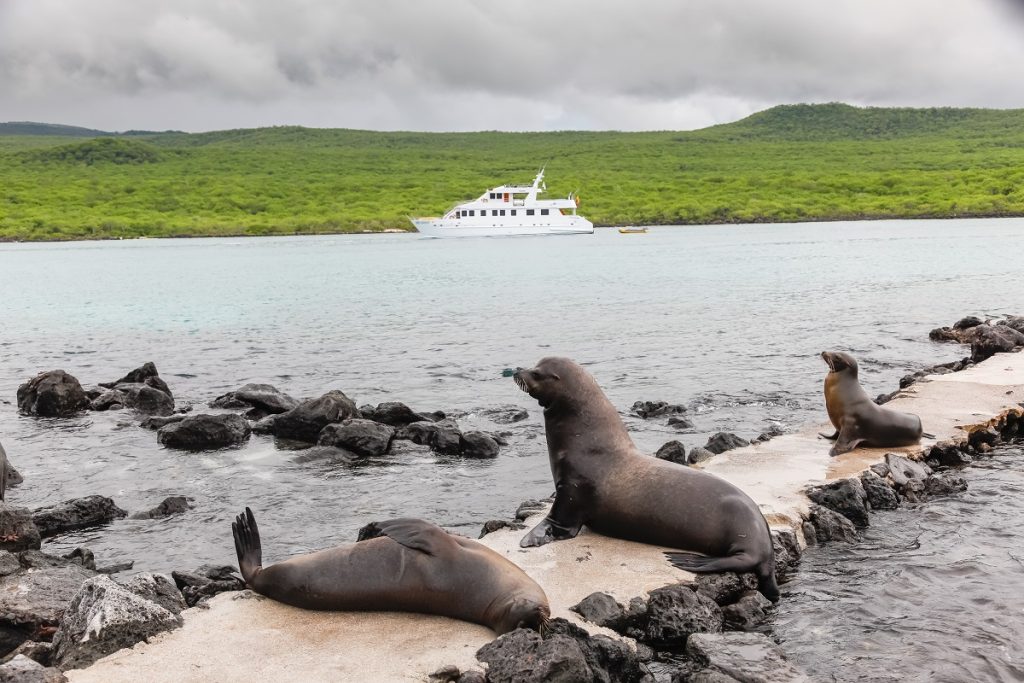
Cruise vs. Land-Based Tours
| Option | Pros | Cons | Budget |
| Cruise | Access remote islands, all-inclusive | Less flexibility, motion sickness risk | $2,500–$10,000+ |
| Land-Based | Cheaper, support local businesses | Limited to nearby islands | $1,000–$3,000 |
Top Day Trips from Puerto Ayora:
Bartolomé Island: Famous Pinnacle Rock.
North Seymour Island: See iconic blue-footed boobies, frigatebirds, and land iguanas—one of the best wildlife photography spots in the archipelago.
Top Day Trips from Puerto Villamil (Isabela Island):
Los Tuneles (Cabo Rosa): A snorkeling paradise among lava tunnels and arches, where you can swim with sea turtles, reef sharks, and seahorses.
Las Tintoreras: Just off the coast, this islet is home to marine iguanas, sea lions, and white-tip reef sharks resting in lava crevices.
Sierra Negra Volcano: Hike to one of the world’s largest volcanic craters for panoramic views and unique geological formations.
Top Day Trips from Puerto Baquerizo Moreno (San Cristóbal Island):
Kicker Rock (León Dormido): Iconic rock formation ideal for diving and snorkeling—look for hammerhead sharks, rays, and sea turtles.
Punta Pitt: A remote site offering the rare chance to see all three booby species (blue-footed, red-footed, and Nazca) in one place.
La Lobería: Easy-to-access beach perfect for relaxing or snorkeling with playful sea lions and colorful fish.
3. Packing List (Beyond the Basics)
Must-Haves:
Reef-safe sunscreen: While not officially banned, chemical sunscreens can harm marine ecosystems and are strongly discouraged. Use mineral-based formulas with zinc oxide or titanium dioxide to protect both your skin and the environment.
Quick-dry clothing: Lightweight, moisture-wicking fabrics are ideal for the humid climate and water-based activities.
Waterproof phone case or dry bag: Essential for kayaking, snorkeling, and boat transfers.
Reusable water bottle: Helps reduce plastic waste (many hotels have refill stations).
Light rain jacket or poncho: Especially useful during the hot/rainy season (Dec–May).
Swimwear and rash guard: Protect your skin from the sun and jellyfish stings during snorkeling.
Pro Tips:
Pack cash (USD): Especially for tips, small purchases, and local eateries—ATMs are limited or nonfunctional on smaller islands.
Bring hiking sandals (like Keens or Tevas): Useful for lava trails, boat landings, and wet terrain.
Dry set of clothes for evenings: Many activities involve water; you’ll appreciate having something dry and comfortable to change into.
Small first-aid kit: Include motion sickness tablets, band-aids, seasickness bands, and any personal medications.
Travel-size toiletries: Minimize waste; eco-friendly products are preferred.
4. Sustainable Travel Practices
Avoid Single-Use Plastics: The use of many types of plastic is strictly prohibited in the Galápagos Islands, including plastic bags, straws, and Styrofoam containers. Visitors are expected to follow these rules to protect the fragile ecosystem.
✅ Tip: Bring your own reusable water bottle, shopping bag, and bamboo or metal straw. Many shops and hotels on the islands sell eco-friendly alternatives.
Wildlife Rules:
Stay 6 feet from animals (yes, even the friendly sea lions!).
Touching the animals is prohibited – even if they approach you.
Never remove natural items (shells, rocks, sand)—it’s illegal.
No drones without permits
5. Hidden Gems & Lesser-Known Islands
San Cristóbal: Visit Punta Pitt for red-footed boobies (fewer tourists than North Seymour).
Floreana: Snorkel at Devil’s Crown (a sunken volcano).
Isabela: Hike Sierra Negra Volcano (second-largest crater in the world).
6. Budget Tips
Save on Food: Menu del día (lunch specials) cost $5–$10.
Free Activities:
Tortuga Bay (Santa Cruz): Pristine beach with marine iguanas.
Charles Darwin Research Station (free entry).
Final Tip:
Book flights and tours 6+ months ahead—the Galapagos limits visitors to protect its ecosystems.


